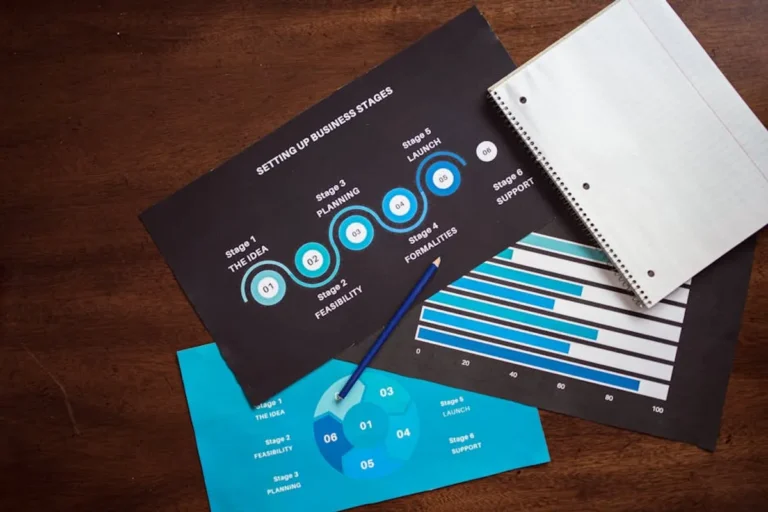

Many small businesses launch websites that function primarily as online brochures, displaying services or products without a clear path for visitor engagement. This approach often results in missed opportunities, as a website’s true value lies in its ability to convert casual browsers into tangible leads, appointments, or sales. Building a high-converting small business website requires a deliberate strategy that integrates user experience, compelling content, and technical foundations to guide visitors toward specific, measurable actions. This deliberate strategy includes designing a page that converts visitors by focusing on clear calls to action and user flow.
Defining Your Conversion Path
Before any design or content creation begins, clearly define what "conversion" means for your specific business. This isn't a one-size-fits-all metric; it varies significantly based on your industry and business model.
Identifying Key Performance Indicators (KPIs)
A website conversion is any desired action a visitor takes. For a local service business, a conversion might be a phone call, a completed contact form, or a booked appointment. An e-commerce site prioritizes product purchases, while a B2B service might focus on whitepaper downloads or demo requests. Establish these primary and secondary KPIs upfront to ensure every element of your site supports these goals.
- Lead Generation: Contact form submissions, email newsletter sign-ups, phone calls.
- Direct Sales: Product purchases, service bookings, subscription sign-ups.
- Engagement: Video views, resource downloads, time spent on key pages.
- Awareness: Social media shares, brand mention tracking.
Prioritizing User Experience (UX) for Engagement
A website that is difficult to navigate, slow to load, or visually unappealing will deter conversions, regardless of how compelling your offer might be. UX is not merely aesthetics; it’s about making the user journey intuitive and satisfying.
Mobile-First Design and Responsiveness
A significant portion of small business website traffic originates from mobile devices. Google's mobile-first indexing further emphasizes the necessity of a seamless mobile experience. Your website must adapt flawlessly to various screen sizes, ensuring readability, easy navigation, and functional forms on smartphones and tablets. Slow mobile load times directly correlate with higher bounce rates and reduced conversions.
Intuitive Navigation and Clear Information Architecture
Visitors should effortlessly find what they need within a few clicks. Employ a logical site structure with clear, descriptive menu labels. Avoid jargon in navigation. For instance, "Services" is more effective than "Our Offerings," and "Contact Us" is clearer than "Get in Touch." A well-organized site reduces user frustration and guides them directly to conversion points.
Pro Tip: Many small businesses underestimate the impact of site speed on conversion. Even a one-second delay in page load time can decrease conversions by 7%. Optimize images, leverage browser caching, and consider a reliable hosting provider to ensure your site loads quickly on all devices.
Crafting Conversion-Oriented Content
Content on a high-converting website serves a dual purpose: it informs and persuades. Every piece of text, image, and video should contribute to moving the visitor closer to a conversion.
Articulating a Unique Value Proposition
Your website's homepage and key service/product pages must immediately communicate what you do, who you serve, and why you are the best choice. Focus on the benefits your customers receive, not just the features of your product or service. For example, instead of "We offer accounting software," state "Streamline your finances and save hours each week with our intuitive accounting software." This clarity resonates with prospective customers.
Strategic Call-to-Actions (CTAs)
CTAs are the direct invitations for visitors to convert. They need to be prominent, action-oriented, and relevant to the page content. Use strong verbs like "Get a Free Quote," "Schedule a Consultation," "Buy Now," or "Download Your Guide." Place CTAs strategically above the fold, within content, and at the end of sections where a decision point naturally occurs. Ensure visual contrast makes them stand out.
Building Trust and Credibility
Visitors are more likely to convert if they trust your business. Integrate elements that build confidence:
- Testimonials and Reviews: Showcase positive feedback from past clients or customers.
- Security Badges: For e-commerce sites, display SSL certificates and payment gateway logos.
- Clear Contact Information: Prominently display phone numbers, addresses, and email on every page, often in the header or footer.
- Awards and Certifications: If applicable, highlight industry recognition.
- Case Studies: Demonstrate how you've helped others achieve results.
Essential Technical Foundations for Visibility
A beautifully designed, conversion-focused website is ineffective if potential customers cannot find it. Technical optimization ensures search engines can crawl, index, and rank your site appropriately.
Search Engine Optimization (SEO) Basics
Implement foundational SEO practices to improve organic visibility. This includes conducting keyword research to identify terms your target audience uses, optimizing page titles and meta descriptions, and structuring content with relevant headings. For local businesses, optimize for local SEO by including your business name, address, and phone number (NAP) consistently across your site and online directories. Utilize schema markup, specifically LocalBusiness schema, to help search engines understand your business details and display rich results.
Site Speed and Core Web Vitals
Beyond mobile responsiveness, overall site speed impacts both user experience and search engine rankings. Tools like Google's PageSpeed Insights provide actionable recommendations for improvement. Focus on Core Web Vitals metrics: Largest Contentful Paint (LCP), First Input Delay (FID), and Cumulative Layout Shift (CLS), which measure loading performance, interactivity, and visual stability, respectively. Addressing these technical aspects ensures a smooth user journey and contributes to higher search rankings.
Measuring and Optimizing for Continuous Growth
Building a website is not a one-time project; it's an ongoing process of refinement. Data analysis provides the insights needed to make informed improvements.
Implementing Analytics Tracking
Integrate web analytics platforms to monitor visitor behavior. Set up conversion goals within your analytics to track specific actions, such as form submissions or purchases. Analyze traffic sources, user demographics, popular pages, and bounce rates to identify areas for improvement. Understanding user flow can reveal bottlenecks in your conversion path.
A/B Testing Key Elements
Don't guess what works; test it. A/B testing allows you to compare two versions of a webpage or a specific element (like a CTA button's color or text) to see which performs better in terms of conversions. Iterate on headlines, hero images, form layouts, and pricing presentations based on empirical data rather than assumptions. Even small, incremental changes can lead to significant conversion rate improvements over time.
Sustaining Conversion Momentum
Building a high-converting small business website is an iterative process. It demands an initial strategic focus on user needs and business objectives, followed by continuous monitoring and optimization. By prioritizing a clear conversion path, a superior user experience, persuasive content, robust technical foundations, and data-driven adjustments, your website can evolve from a static online presence into a powerful, lead-generating asset for your business.
Frequently Asked Questions
How long does it take to see conversion results from a new website?
Initial results can appear within weeks, but significant conversion rate improvements typically require 3-6 months of consistent optimization, data analysis, and A/B testing. SEO visibility also takes time to build.
What's the single most important conversion element for a small business website?
While many elements contribute, a clear and compelling Unique Value Proposition (UVP) combined with strong, relevant Call-to-Actions (CTAs) is often the most critical. If visitors don't understand what you offer and what to do next, they won't convert.
Do small businesses need a blog to convert visitors?
A blog can significantly aid conversion by establishing authority, answering customer questions, and attracting organic traffic through informational content. While not strictly mandatory, it supports lead generation and builds trust, especially for businesses with complex services or products.
How often should I update my small business website?
Functionally, ensure all forms, links, and content are current at least quarterly. Strategically, review performance metrics monthly and consider content refreshes or A/B tests on key pages every 3-6 months to maintain relevance and optimize conversion paths.